
Interference
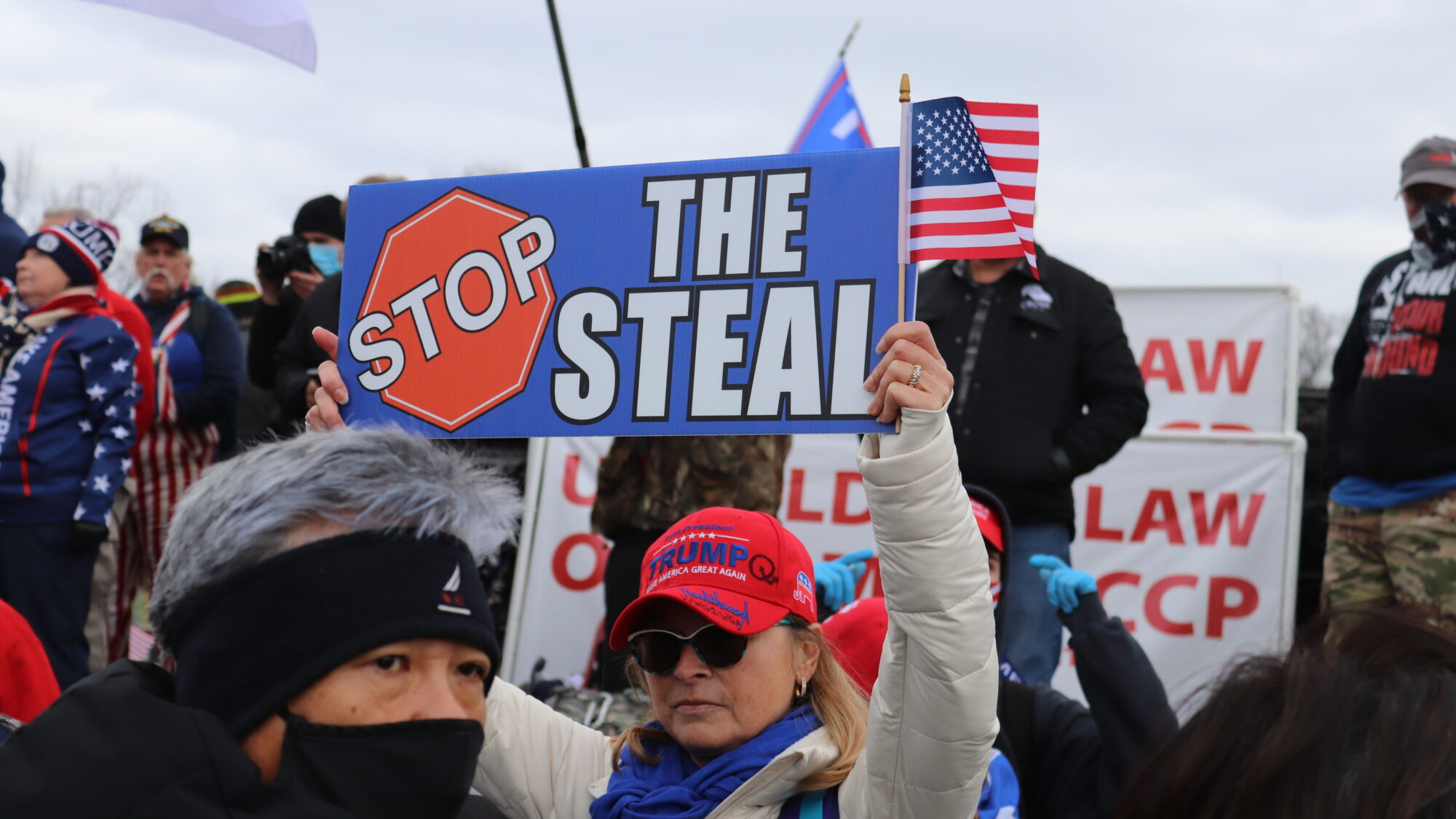
A protester following the 2020 Presidential Election. Source: Protect Democracy.
As the November midterm elections inch closer, The Washington Post reported that a small group of national security officials has been discreetly advising state governments and congressional lawmakers on how to prepare for the possibility that the Trump administration could interfere in the election. The story suggests that election officials focus on domestic rather than foreign issues. Tammy Patrick of the National Association of Election Officials told the Post that possible federal interference has become the dominant concern.
The advisers’ case rests on interference rather than outside information. Their warnings were reportedly based not on sensitive intelligence but on analysis of President Trump’s public statements and the administration’s activities. One example is the Justice Department threatening California election officials over ballots allegedly issued to noncitizens.
White House Spokesperson Lauren Bis dismissed the concerns, said the administration is prosecuting election crimes and strengthening election infrastructure security, and blamed Democrats for not supporting stricter election laws. Meanwhile, the Pentagon and the Department of Homeland Security have denied plans to deploy troops or immigration enforcement personnel to voting sites, which was reportedly among the scenarios the advisers raised.
This escalation points to a structural feature that could be easy to overlook. Because the Constitution largely entrusts elections to the states, any federal effort would have to work through a patchwork of state systems, which can act as a built-in safeguard. That same decentralization complicates preparation, however, since one group member said officials told advisers they were concerned but did not know how to respond.
Public opinion adds a second layer, as a Washington Post-ABC News-Ipsos poll found that seven in ten Americans doubt President Trump would accept midterm results if Republicans lose; majorities in both parties expect a fair vote. That gap suggests the pressure point may come after ballots are cast, during certification and disputes over results, rather than at polling places.
Because the advisers worked from public conduct rather than classified material, their warnings and the White House’s dismissal of them respond to the same public record, and neither depends on evidence that has yet to surface. That means no disclosure before Election Day is likely to settle the question. The first real test will come after November 3, when there will be an actual outcome and the administration’s handling of it to compare against the forecasts.