
North Carolina’s Meta Settlement Raises Questions About Accountability and Public Spending
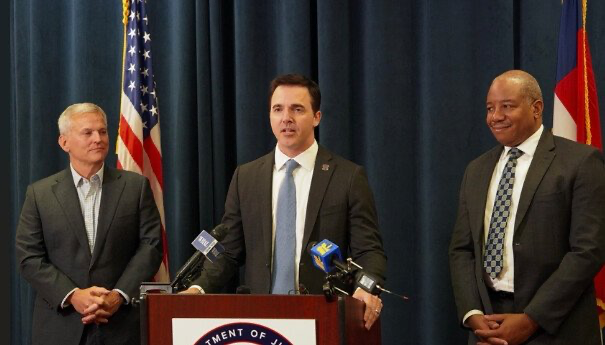
Attorney General Jackson announced the settlement with Meta in August of 2026. Source: NCDOJ.
North Carolina received its first $45.2 million payment from Meta Platforms, Inc., as part of a settlement over allegations that the company's social media platforms are harmful to young users. Meta, which owns Instagram, Facebook, and WhatsApp, made the payment as the first installment of a settlement that could bring up to $645 million to North Carolina by 2035. The state is guaranteed at least $451 million, with an additional $194 million available if other major social media companies agree to implement similar safety measures.
While the settlement marks a significant development in the North Carolina Department of Justice’s efforts to hold social media companies accountable, its long-term impact could depend on how the state uses the funds. With the General Assembly responsible for determining how the funds are spent, lawmakers face a decision about whether the settlement should serve as a broader source of state funding or be directed toward addressing the harms alleged in the original lawsuit. Prioritizing programs that support children's mental health would establish a clearer connection between the lawsuit's purpose and the state's financial recovery.
The settlement stems from a 2023 lawsuit brought by North Carolina and 32 other states alleging that Meta designed features on Instagram and Facebook to intentionally keep minors engaged while downplaying potential risks to their mental health. According to the North Carolina Department of Justice, the states alleged that Meta’s platform design encouraged prolonged engagement while concealing potential harm to young users. These allegations are important when considering how the settlement funds should be allocated.
Attorney General Jeff Jackson has encouraged lawmakers to fund after-school and summer programs, crisis helplines, and additional school health personnel. These proposals reflect an approach that extends beyond restricting social media use for children who may already be struggling. School-based mental health services, in particular, could offer support to students experiencing emotional or behavioral challenges, including those associated with social media use.
However, the North Carolina General Assembly is not required to follow Jackson's recommendations. Because the legislature could determine how the funds are spent, the settlement raises questions about the relationship between legal accountability and political decision-making. Allowing lawmakers flexibility in allocating public funds can help them respond to competing needs across the state. At the same time, using settlement money for purposes unrelated to children's well-being could weaken the connection between the lawsuit's original objectives and its eventual outcome.
This distinction matters because the financial recovery alone does not guarantee that the children at the center of the lawsuit could benefit. If the funds are absorbed into broader state spending without specific priorities or measures of effectiveness, it may become difficult to determine whether the settlement produced meaningful improvements in youth mental health. Establishing clear spending goals and publicly reporting how funds are distributed could help ensure that the settlement's impact extends beyond the initial payment.
The agreement also requires Meta to implement new safety measures for teenage users. These include a default two-hour daily limit on access to Instagram and Facebook feeds, restrictions on overnight use, disabled notifications during school hours, and like counts hidden by default. Furthermore, parents could also receive additional authority over certain account settings.
While these protections address several of the platform features identified in the lawsuit, they do not eliminate the need for public investment in children's well-being. Restrictions on social media use may help limit exposure to potentially harmful features, but they cannot independently address mental health challenges that have already developed or those influenced by factors beyond social media. The settlement therefore presents two distinct responsibilities: Meta must implement changes to its platforms, while North Carolina must decide how to use the financial recovery to support young people. Treating these responsibilities as complementary would allow the settlement to address both future risks and existing needs.
North Carolina’s settlement with Meta represents a significant legal and financial victory, but whether it could translate into meaningful improvements in resources supporting youth health and safety remains uncertain. While the agreement requires Meta to modify features associated with the alleged harms and implement new safety measures, the impact of the financial recovery could depend on decisions yet to be made.
As state lawmakers determine how to allocate funds, the question is no longer whether Meta has been held accountable, but whether that accountability could result in meaningful change for the young North Carolinians the lawsuit was intended to protect.