
September Storm Surprises Northeastern United States
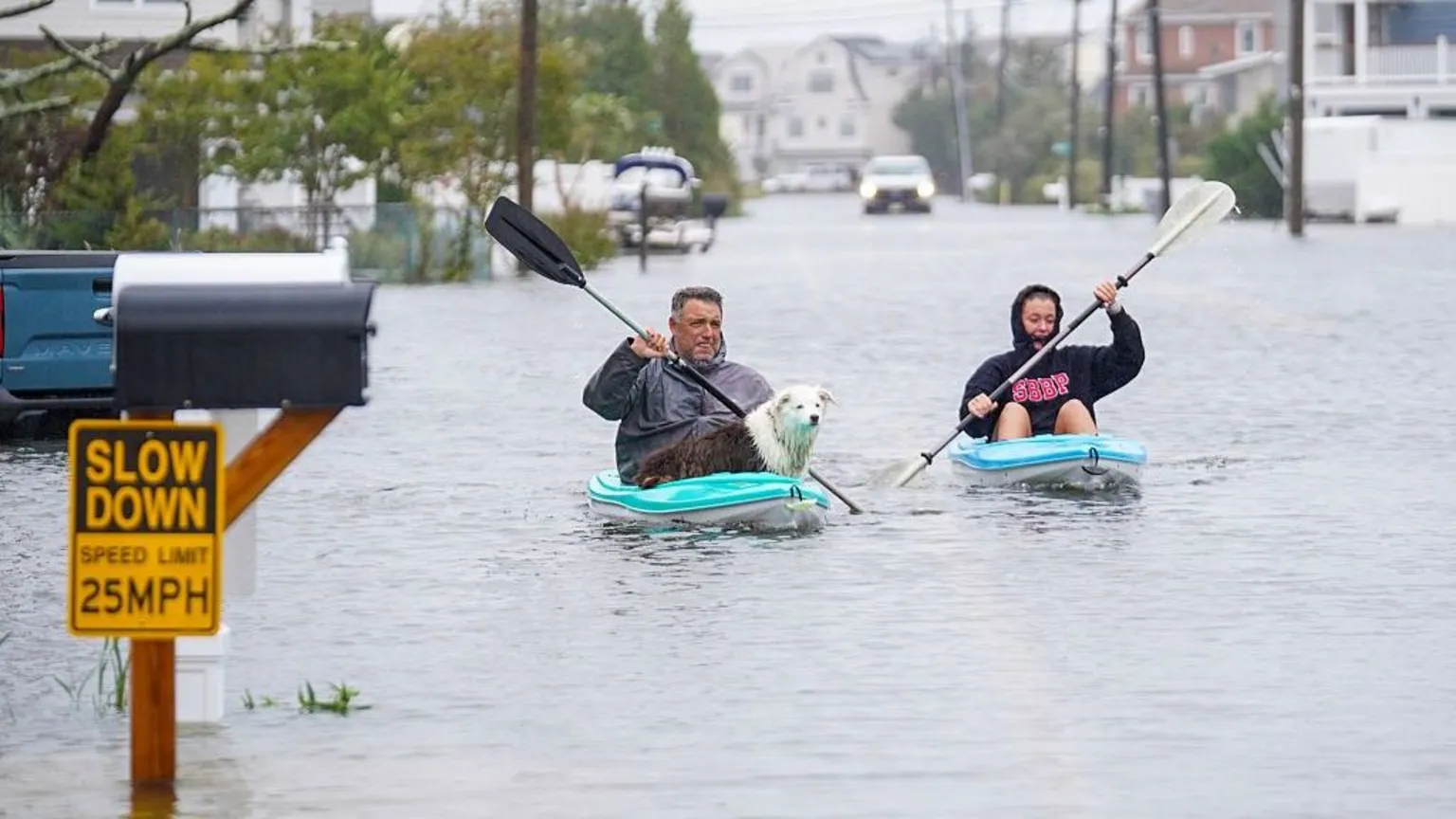
Two people kayaking down a flooded street in New Jersey. Source: BBC.
As of September 26, a historic storm raged in the United States’ Northeast. One resident said they had not seen water that high since Hurricane Sandy in 2012. The storm brought unprecedented rain and flooding. New York and New Jersey declared states of emergency in two counties. The state of emergency applied to the Bronx, Kings, Nassau, Queens, Richmond, Suffolk, and Westchester in New York, and in Atlantic, Burlington, Cape May, Cumberland, Middlesex, Monmouth, Ocean, and Salem in New Jersey.
The National Weather Service (NWS) warned residents to beware of flooding and inundation in low-lying areas, including homes, streets, and businesses. New York City Mayor Zohran Mamdani told residents to stay inside and avoid travel if not necessary.
The storm is also abnormal because it came earlier than the usual October to May storm season and stayed in place for 48 hours rather than moving quickly.
The storm halted interstate travel. More than 1,000 flights were canceled on September 26, and thousands more were delayed. Amtrak canceled several trips, and ferry and boat services on Rhode Island and Cape Cod were disrupted.
Residents did not have any luck staying home. More than 130,000 households lost electricity during the storm, spanning all over the Northeast. These power outages persisted for hours, meaning air conditioning turned off, internet and electronics were down, traffic lights were turned off, and more.
The storm also caused casualties and loss. One man, Leighton Brown, was killed by a falling tree. Brown was a 56-year-old employee of the New York Housing Authority and was walking through Brooklyn when the tragic accident occurred.
The Governor can declare a state of emergency if a disaster occurs or is unavoidable and the local governments cannot respond adequately. A FEMA report showed that state disaster response agencies are often underfunded and understaffed. Therefore, local governments could not handle the heavy storm damage on their own.
Although state laws differ, state forestry agencies conduct damaged property evaluations to determine who is owed compensation. These services help private owners and native tribes rebuild destroyed land. The state agencies also determine what families and businesses qualify for financial aid, and the agencies help restore the damaged land. The state assistance often has several environmental benefits, including returning nutrients to the soil and protecting habitats and resources. These are longer-term relief programs that help the land return to its original state.
The federal government also provided damage relief funds. After the storm, the Federal Emergency Management Agency (FEMA) worked with the Department of Homeland Security (DHS) and local governments and native tribes to coordinate safety protocols, keep residents safe, provide funding, and help in the aftermath of the storm. They are expected to remain in contact with affected areas until they have recovered.
State governments work closely with the federal government to create a plan of safety. For example, New York encourages making safety kits with water and flashlights. The Governor declares a state of emergency, federal agencies prepare to help during and after the storm, and state agencies help restore land. New York and other states immediately dip into the appropriated state natural disaster funds in their respective state budgets. The state and federal government collaboration creates plans that allow communities to bounce back from natural disasters. One without the other does not offer enough support to persist through a disaster.
However, the FEMA design is changing. The Trump Administration shifted support for areas affected by natural disasters. This shift could make it difficult for states to access federal aid after a natural disaster.
In May, the Trump Administration created a council to recommend changes to FEMA. The Administration stated that its goal was to make it easier and more streamlined for disaster victims to receive aid. The council then recommended increasing the federal government’s involvement and aid in disasters and shrinking the National Flood Insurance Program.
FEMA recommended increasing the federal relief threshold by 50%. However, 29% of disasters between 2012 and 2025 would not have met the new threshold. This means many disasters that previously received FEMA aid to rebuild their communities may not have received aid this time.
A key point about FEMA is that if FEMA recommends a state for federal relief, the president can still choose to declare an emergency and award relief. This new threshold could reduce the federal relief support. Additionally, the threshold creates an opportunity to politicize federal disaster aid. The changes also place much higher responsibility on states to provide relief funds.
FEMA did allocate funding to New York and New Jersey in response to the September storm. However, if new FEMA recommendations had been in effect, it could have been more difficult. If damages don’t meet the federal threshold, New York and New Jersey would receive no funding and would have to repair without the federal government. Funding disaster repair without the federal government would be difficult given the lack of funding and employment in most state agencies.
New York and New Jersey may also have been at the mercy of President Trump, who decides who receives funding. The president could have political bias influencing his decision, resulting in certain left-leaning states not receiving funding.
These recommendations have not yet been enacted. If they are, states will have a harder time qualifying for federal aid, and victims of disasters such as this September storm may not have received funding and aid from the federal government.
If FEMA enacts these changes, areas where storms cause extreme damage may not receive federal aid. This means families and communities might have to make do with limited state funding after a natural disaster, and recovery time for affected areas could increase dramatically.