
Housing Crisis in Spain Pushes Prime Minister to Call Snap Election
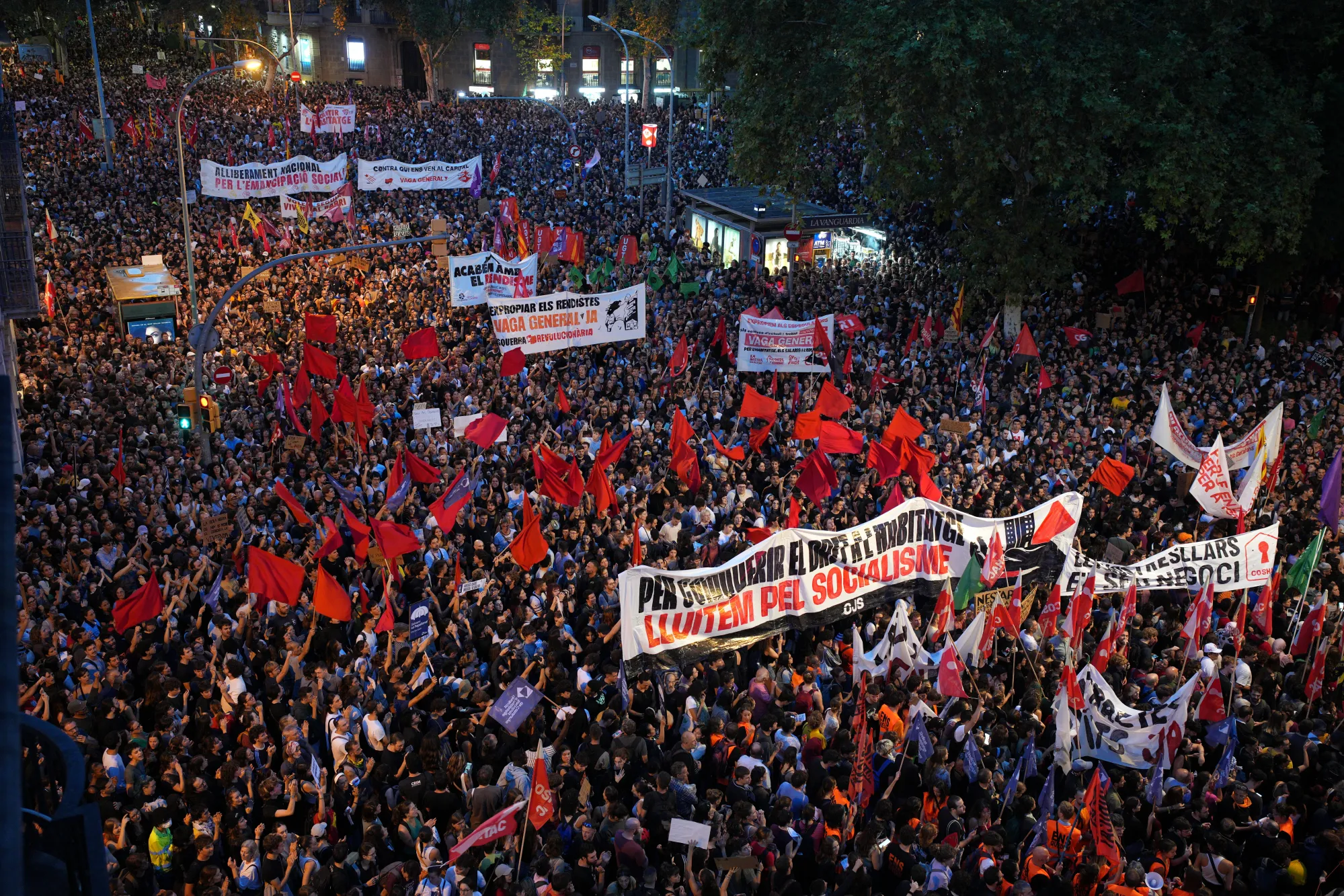
Protestors marching in Barcelona, Spain after Prime Minister Sánchez announced snap elections. Source: The Hill.
Over the past decade, average rents in Spain have nearly doubled, fueling tensions between potential homeowners and the government. Many young people who hope to own homes are facing soaring house prices and stagnating job salaries, rendering them unable to keep up with rising costs that the housing market demands. As public outrage mounts, demonstrators have established semi-permanent protest encampments in Madrid’s Puerta del Sol square.
Demonstrators attribute the cause of the crisis to one thing: a lack of homes. Private equity “vulture funds” have bought many homes in the already limited supply, inflating prices for profit. Due to the persistent lack of homes, homeowners are forced to either try to buy these homes at unaffordable rates or rent from landlords who have increased rental costs by 84 percent over the past decade. This forces citizens to choose between spending an average of 50 percent of their paycheck on housing or living with family instead. These frustrations culminated when a vulture fund bought and increased the rent of 87-year-old Maricarmen Abascal. Her subsequent eviction from her residence helped spark the housing protests that are unfolding today.
In response, Prime Minister Pedro Sánchez proposed two decrees to deal with housing affordability. The first decree aimed to suspend the eviction of vulnerable tenants with tax breaks for landlords who lowered rents, temporary bans on real estate purchases by vulture funds, and regulations on tourist rentals. The second decree aimed to make leases automatically renew upon expiration, and breaking this contract would require property owners to pay a tenant up to a full year’s lease.
Sánchez’s coalition does not hold the majority in Parliament, and when the small right-wing Junts party retracted its support before the vote, the legislation fell through. Junts justified its veto by explaining that the legislation would increase housing prices and reduce the housing supply because landlords would pull properties off the market, driving up prices.
After this rejection, Sánchez announced snap elections on November 29 due to his coalition’s vulnerability within Parliament. This election is a call to citizens—if they want housing changes, the majority in Parliament needs to change so left-wing parties can have a stronger mandate. If it backfires, right-wing coalitions could gain a majority and create more severe housing policies. A day after this announcement, Sánchez’s cabinet re-approved an amended version of the housing decrees.
Ultimately, it is now up to the citizens to push for the change in governmental policies that they have been protesting for. Without a majority in Parliament, it could become more difficult for housing policies to pass, but legislation in other areas could suffer as well. As a result, unemployment, inflation, and economic productivity issues could all be exacerbated. Growing dissatisfaction with government policies can push citizens to seek employment elsewhere, most likely abroad, driving up emigration rates.
Currently, Spain’s unemployment rate is 10 percent, with youth unemployment just over 22 percent, so qualified graduates seek competitive salaries and careers in other countries, such as other EU nations. This could be detrimental for Spain’s labor force, which needs a steady flow of young adults to maintain labor mobility, the economy, and the population. Furthermore, poverty issues could become amplified as low-income families might not be able to keep up with the increasing housing costs, and the risk of homelessness and forced evictions can increase.
If this continues, Spain’s housing crisis could have further political and economic consequences. Without decisive policymaking, Spain risks losing the potential of its younger generation and could further exacerbate its issues.