
Not On the Itinerary: FBI Director Patel’s Moscow Trip and the American Diesel Deal
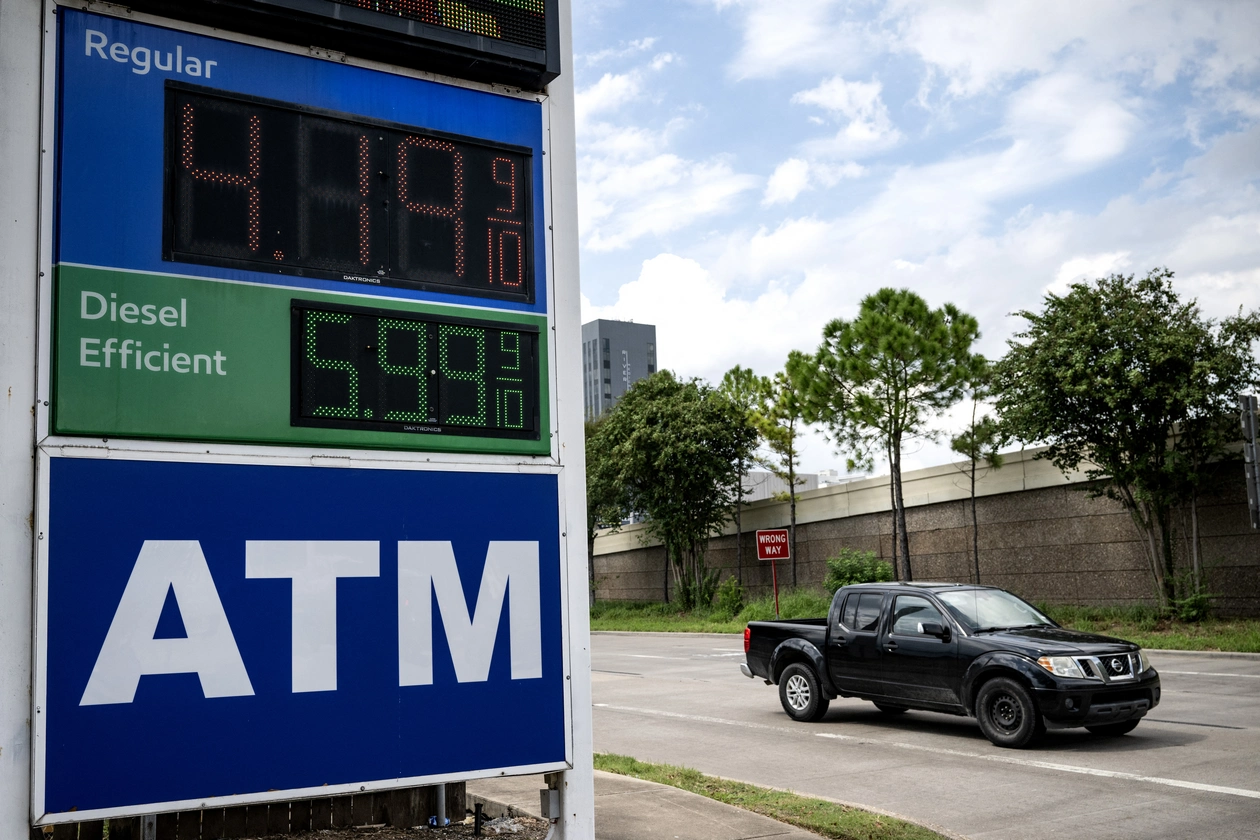
Diesel and gas prices seen in Houston on October 2. Source: Politico.
While the relationship between the United States, Russia, and Ukraine has been consistently tumultuous, a new chapter was written over the summer as Politico reported that FBI Director Kash Patel was planning to visit Russia in mid-October. Politico assumed his host would be the Russian Federal Security Service (FSB), a descendant of the Cold War-era KGB. The trip’s purpose was not specified; however, Politico and others inferred it could center on strengthening domestic law enforcement and investigative skills. Observers were quick to point out that this trip would fall shortly before midterm elections, scheduled for early November, and many shared concerns about potential Russian involvement in American elections.
Initial concerns of Russian interference in the American electoral process surfaced in 2016, with the FBI’s release of an indictment of twelve Russian military intelligence officers for their alleged roles in tampering with the presidential election, when President Trump won his first election bid. Now, ten years later, history may not have repeated itself, but it may be rhyming, as further allegations of Russian interference in key electoral races surface shortly before the midterms.
Patel’s trip ultimately never occurred, a fact misreported by MS NOW, which alleged Patel arrived in Russia earlier this week and was quickly fact-checked by FBI officials who cited Patel’s presence at a law enforcement conference at Liberty University at the same time as the planned trip. This is not to say that a trip was never planned, or that it won’t be rescheduled. Two senior House Democrats, Rep. Jamie Raskin (MD-08), the ranking member of the House Judiciary Committee, and Rep. Jim Himes (CT-04), the ranking member of the House Intelligence Committee, said the cancellation of the trip was due to “the interest of national security.”
This concern for national security and harmful association with the Russian regime has been echoed in recent media reports from Reuters that Patel is in the process of strengthening law enforcement relationships with Russia and China, two of the United States’ most competitive adversaries on the world stage. American foreign relationships with these two nations have been turbulent at best in the last decade, especially with President Trump’s use of Russian oil reserves as a lever to decrease domestic fuel prices in recent years.
Adding to the skepticism regarding Patel’s trip, the White House announced on Friday, October 9, that it had reached an agreement with Russia to temporarily lift sanctions on Russian diesel reserves along with a sale of over 300,000 tons of diesel in an attempt to lower gas prices at home prior to the midterm elections. These negotiations counteract the actions taken by President Trump last month in supporting widespread sanctions against Russian energy sectors in order to weaken funding for the Ukrainian War effort, a law named for late Senator Lindsey Graham (R-SC).
Consequently, President Trump went on the offensive against Ukrainian President Vladimir Zelensky after he voiced outrage that the United States was funding Russian war budgets with the deal, with Trump commenting that it was “Time for Ukraine to get a new president.” This verbal criticism follows Trump’s criticisms of Ukraine for attacking Russian oil refineries and, in his view, disrupting the global oil supply. Regardless, lifting sanctions against Russia is slated to last until April 7 of next year.
As the midterms approach, many are skeptical of how FBI Director Patel’s potential trip to Russia may be related to the recent oil deal, midterm projections, the global energy market, and President Trump’s use of executive agencies to carry out broader political objectives.