
North Carolina Legislation Suspends Gas Tax
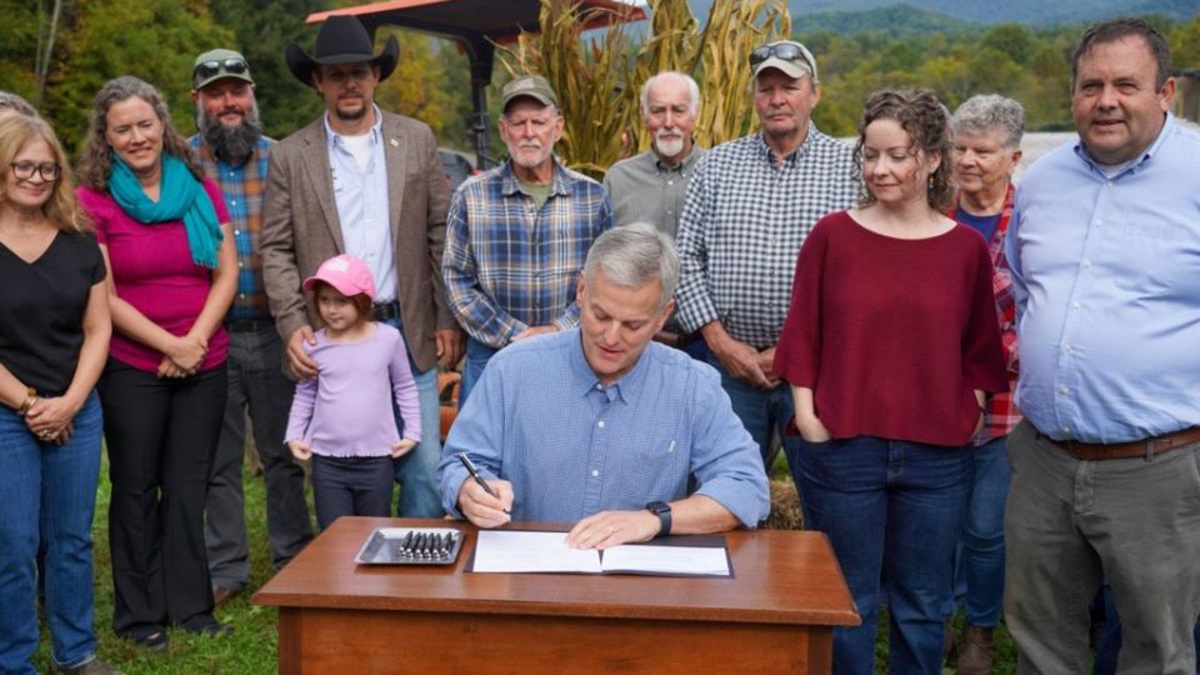
North Carolina Governor Josh Stein signs the “Relief at the Pump” bill into law. Source: Raleigh News & Observer.
On October 9, 2026, North Carolina Governor Josh Stein signed Session Law 2026-62 into effect. The new law temporarily suspends the North Carolina Motor Fuel and Excise Tax until November 30, 2026. Along with suspending the tax, the law temporarily suspends enforcement of civil and criminal penalties for dyed diesel fuel used to operate a highway vehicle until December 31, 2026.
Recently, Americans have expressed discontent with fuel prices across the country as the war between the United States and Iran has increased national gas prices. To lower gas prices, state lawmakers suspended the 41-cent gas tax on October 7, 2026, in a special legislative session with a near-unanimous vote. Despite this, gas prices remain volatile as the war rages on.
Despite unpredictable fuel prices, AAA has noted a decrease in average gas prices. As of October 13, 2026, the North Carolina average gas prices fell from $4.09 to $3.81. Despite this, economists report that consumers have yet to experience the full effect of the tax suspension, the realization of which may not come for another couple of weeks. Some economists warn that certain consumers may never see the full 41-cent price decreases, and that savings are dependent on the area.
The law is expected to cost the state more than $350 million in revenues—funds that would primarily support North Carolina Department of Transportation projects. In anticipation, North Carolina legislation will allocate funds from the state’s $11 billion inflation reserve fund to maintain NCDOT project funding.
The law has shown benefits and could have adverse consequences without necessary precautions, primarily enforcement of the tax cut itself. Suspending the gas tax would lower taxes for gas stations, but lawmakers expect them to pass those savings on to consumers. Despite this expectation, the new law does not require gas stations to lower prices; however, North Carolina laws restrict deceptive practices. If the law were incorrect, consumers could continue paying high fuel prices while distributors reap the profits.
North Carolina Democrats, including Governor Stein, suggest the law was passed to secure Republican re-election in November. As North Carolina Republicans claim the state is growing more Democratic, paired with anti-GOP headwinds nationally, they could face seat losses in November. Recent surveys suggest that Independents, a large and often decisive constituency in North Carolina, appear likely to break for Democrats in the coming election.
Republicans currently hold a supermajority in the North Carolina Senate; however, losing this supermajority in November could be a significant loss in political control in the state. This supermajority currently held by Republicans allows the Senate to override any veto power Governor Stein has on proposed legislation. Without this supermajority, Republican lawmakers must cooperate with Democratic lawmakers to push their agenda.
Economic factors, such as the price of goods, may influence voting patterns in the upcoming election. As Republican lawmakers brace for the election, reducing gas prices could very likely be the cornerstone of their strategy to boost their standing with North Carolina’s voters.
Nonetheless, the law’s passage reflects bipartisan cooperation amongst North Carolina legislators. After the “Relief at the Pump” bill was passed almost unanimously, North Carolina House Speaker Destin Hall (R-Caldwell) said Republican fiscal policy could be the reason for the law, which gave the budget enough leeway to support the loss in tax revenue.
Time will tell whether this bipartisan cooperation is simply an election stunt or motivated by other factors. In the meantime, North Carolinians can enjoy the savings regardless.