
Representative Haley Stevens Endorses GOP Candidate Mike Rogers in Michigan Senate Race
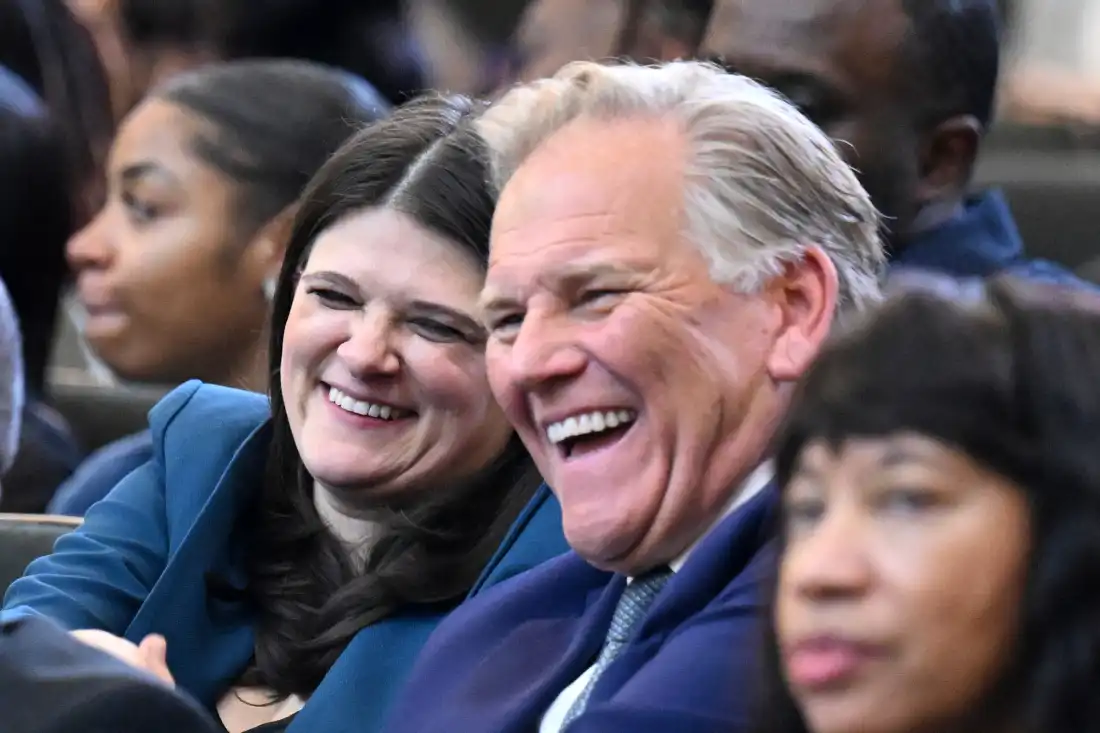
Rep. Haley Stevens (D-MI) (left) and Michigan Republican Senate candidate Mike Rogers (right) attended a service at Perfecting Church, Sunday, November 1, 2026, in Detroit. Source: NPR.
On Sunday, November 1, Rep. Haley Stevens (D-MI.) announced her endorsement of Republican Mike Rogers in Michigan’s U.S. Senate race, reversing her previous endorsement of her former Democratic primary rival, Dr. Abdul El-Sayed.
Stevens’ last-minute endorsement of Rogers comes amid longstanding tensions with El-Sayed over Israel and Gaza. Their relationship had remained strained following their contentious Democratic primary, particularly over El-Sayed's criticism of U.S. support for Israel. Tensions escalated when Stevens demanded that El-Sayed condemn an outside group's advertisement that she considered antisemitic. After his campaign asked her not to attend upcoming events, Stevens cited her exclusion as a reason for endorsing Rogers. Her fiancé, Jason Turkish, had also recently announced his support for Rogers, potentially influencing her decision. However, her exact motivations remain uncertain.
Her endorsement directly contradicts her previous criticism of Rogers. During the Democratic primary, Stevens had warned that Rogers would be a “rubber stamp for Donald Trump's dangerous agenda.” She had also repeatedly pledged to support El-Sayed after losing the primary, including as recently as days before her endorsement. Her reversal therefore raises questions about whether her decision reflects genuine policy disagreements or the deterioration of her relationship with El-Sayed.
Many key players in the Democratic Party have come out against Rep. Stevens and in support of El-Sayed, including Senate Minority Leader Chuck Schumer (D-NY), who called the endorsement a “despicable betrayal.” Representative Nancy Pelosi (CA-11) said Stevens “dangerously [betrayed] Michigan families’ healthcare, freedoms and future with her horrific endorsement of Mike Rogers.” Additionally, members of Stevens’ staff on Capitol Hill have resigned after the endorsement, including her Chief of Staff and Communications Director.
With Election Day on November 3, Stevens’ endorsement has intensified divisions within the Democratic Party at a critical moment in Michigan’s Senate race. While the electoral impact of her last-minute reversal remains uncertain, the decision has raised broader questions about party loyalty, political accountability, and the influence of personal disagreements on public endorsements.
As voters prepare to head to the polls, Stevens' reversal has become a story not only about who will represent Michigan in the Senate, but also about the consequences of breaking with one's own party.