
Propaganda or PSA?
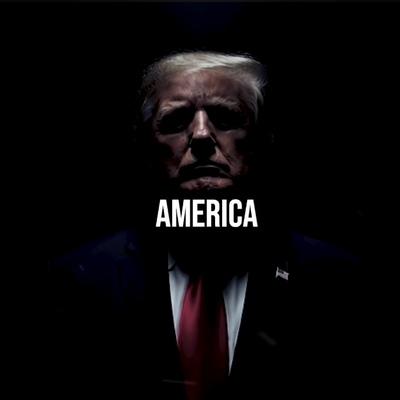
Trump's “non-partisan” ads have a common theme of celebrating him and his presidency as far surpassing previous administrations. Source: New York Magazine.
In early September, while watching the evening news, the American public noticed a series of ads depicting Trump and his administration as larger-than-life victors. Although this aligns with other media produced by the Republican Party, the unusual characteristic in these specific features was the tiny text at the bottom of the screen: “Paid for by the U.S. Government.”
“Paid for by the U.S. Government” indicates potential use of taxpayer money, and, in this case, that was true. In 2025, Trump’s signature tax and spending bill strategically redirected $6.2 billion of tax revenue to the Department of Homeland Security for border enhancement, including a separate fund for “commemorative” events. This phrase has no tangible meaning for DHS. On September 19, federal budget records revealed that money in this “commemorating” fund was awarded to an advertising agency under a memo for a “National Media Campaign.” A few days later, Trump’s ads appeared on Americans’ screens.
In these ads, Trump is fawned over in many different ways. In the first released ad, over a chorus singing “love me,” Trump is praised by a variety of voices with anti-communist messages plastered across the screen, foolishly implying that Trump perhaps was responsible for defeating communist threats before his time. The second ad asserts that Trump’s term is the “golden age of America,” without mentioning the four percent rise in grocery costs or the fifty percent rise in healthcare costs. In the third, shown in stark black and white, Trump explicitly declares war against the “deep state” and general political opponents, showing again Trump’s prioritization of fighting with people in his government rather than fighting for the people whom he presides over.
The Democratic National Committee (DNC) quickly responded with a lawsuit, alleging that using taxpayer funds was, in a sense, a robbery. Specifically, the DNC accused Trump of violating the 2026 Consolidated Appropriations Act, which established that funds could not be used for “publicity or propaganda purposes.” Two separate charges included violations of the Antideficiency Act and the Purpose Act, both of which limit executive spending to what Congress appropriates. Congress did not appropriate the ads.
In response to the DNC, the White House said that the ads were a PSA to “[remind] Americans to love their country.” This could counter the rapid decline in Trump’s approval ratings. White House representatives compared these alleged PSAs to past official communications explaining how to apply for the Affordable Care Act. To fight accusations that the ads were meant to boost Trump’s popularity, the White House said that, because Trump could not run for president next year, that was not possible. Similarly, representatives at the DNC characterize this endeavor as being a plan to bolster the Republican Party before the midterms, even if it is at the expense of the finances of Republican Party members. However, if these ads truly weren’t for any political opinion boost, then why were American taxpayer dollars spent on violently color-graded slow-mo shots of Trump?
The claim that the ad campaign was a series of PSAs garnered large criticism. One constitutional law professor, Jessica Levinson of Loyola Law School, explains that in all PSAs the administration identifies as “similar” examples, there was actual substantive information being broadcast. Levinson said, “There is no similar program or initiative that President Donald Trump is … drawing attention to.” By this logic, Trump’s ads cannot be a PSA.
Rep. Jamie Raskin (D-MD) echoes the concern. He said, “A public service announcement educates and informs,” and that the first ad in particular “does not educate or inform anyone about anything.” An actual PSA would maybe urge vaccinations in response to a measles outbreak, but in Trump’s ads there is nothing of comparable importance to be found.
Additionally, the ad content could be seen as a waste of taxpayer dollars. Two senators, Patty Murray (D-WA) and Chris Murphy (D-CT), issued a public letter addressed to the Trump administration accusing their use of government funding as illegal, stressing that while the president is “stealing [civilian] tax dollars to air campaign ads celebrating himself,” there is substantially less effort in the pursuit of affordable healthcare or housing. Murray and Murphy strongly urged the administration to pay the public for the tax dollars used in the ads.
If the goal is to sway the public toward Trump, this hardly seems to be working. A Reuters-Ipsos joint poll exposed the fact that 86 percent of Americans, including four out of five Republicans, believe it is “inappropriate” for Trump to use government spending for the ads. Further fueling the conflict, the White House responded that if future ads are funded by government spending, taxpayers could get their money back; however, Trump said these “ads were really good.” It seems as though taxpayers may not get their money back after all. What is one man’s money for food is another’s budget for a “really good” ad campaign.
This use of taxpayer funds is another example of Trump’s consolidation of presidential power. If the DNC is correct, Trump has once again overstepped the limits of his presidency through the 2026 Consolidated Appropriations Act, the Antideficiency Act, and the Purpose Act. Although Congress held the responsibility to distribute taxpayer funds in the above acts, Trump has messily stuck congressional authorities he's hungered for into a rising agglomeration in the executive. D. Schwinn said side-stepping of congressionally allotted powers is nothing new: this is a “common course of action” to “aggrandize the power of the presidency at the expense of coordinate branches…in violation of the separation of powers.”
What must be noticed, however, is that through the Trump administration’s blatant lies about the intent of the ad campaign, Trump’s reaction to both the public and the DNC breaks the administration’s momentum. Trump announced on Truth Social that instead of continuing to use Department of Homeland Security funds, his super PAC, MAGA Inc., could fund further campaign-style ads.
This change in phrasing is not something new—for there are many things that Trump has claimed he would do but never followed through—but the tangible funding difference is a flag. While the shift in ad funding may look like respect for the hardworking dollars of taxpayers, the denial that the funds were ever misused in the first place and the very concept of an ad campaign that applauds the president instead of spreading awareness about the U.S.’s rising income inequality gap is proof that the announcement on Truth Social wasn’t conciliatory. It was backing out of an argument that Trump didn’t want to fight.
Although creating and airing the ad campaigns consolidates power, the public disapproval is worth noticing. Only time will reveal whether this was a momentary blink by the administration in a stare-off with its constituents or the beginning of a presidential humbling. The only thing that is for certain, though, is that Trump’s administration is not acting with completely deaf ears.