
SAVE What? The SAVE Act, Program, and Fight for Election Integrity
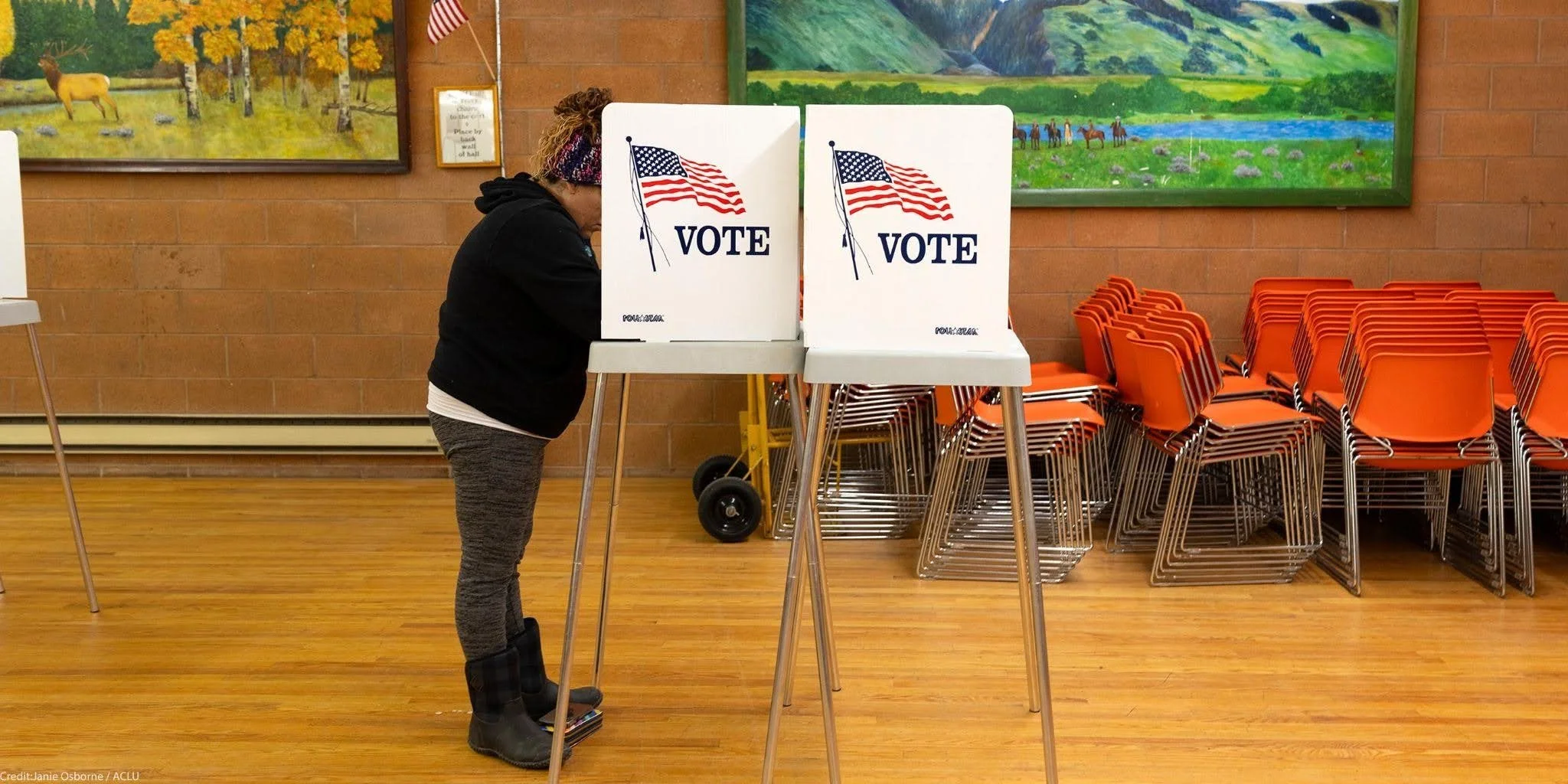
Polling booths in 2025. Source: ACLU.
The Safeguard American Voter Eligibility (SAVE) Act, introduced in 2025 by House Republican Chip Roy (TX-21), would overhaul current voter registration systems, requiring documentary proof of U.S. citizenship when registering to vote in federal elections. No such requirement currently exists. The standard is an attestation that individuals are U.S. citizens and requires verification through a driver’s license or state identification. Stalled in the Senate, it was reintroduced in 2026 to the House of Representatives as the SAVE America Act, retaining its earlier provisions and adding a photo identification requirement to vote in federal elections.
The Systematic Alien Verification for Entitlements (SAVE) Program, run by the U.S. Department of Homeland Security, is an online intergovernmental service that allows governments and authorized entities (federal, state, local, etc.) to determine individuals’ citizenship status. Historically, it has been used to grant benefits like the Supplemental Nutrition Assistance Program (SNAP). However, following the Trump administration’s 2025 expansions to the system, it can now conduct bulk searches of voter registration databases against federal records and search by Social Security numbers, transforming the database into a tool for election administration. This past June, federal District Court Judge Sparkle L. Sooknanan blocked the updated SAVE program and its use for checking state voter rolls, citing concerns about privacy and database accuracy.
On September 25, the Supreme Court stayed the lower court order in Department of Homeland Security v. League of Women Voters, rendering it unenforceable as the case proceeds and allowing the augmented SAVE system to operate. The Court’s majority ruled that federal law (Illegal Immigration Reform and Immigrant Responsibility Act) required the DHS to respond to states’ citizenship inquiries, and the lower court order prevented this response even on an individualized basis. The Court said, “The order prevents the Federal Government from using the modified SAVE program to conduct individualized inquiries, which are permitted under federal law during this period.” The Court also said, “Thus inhibits the Federal Government’s efforts to assist state and local agencies in the proper administration of the midterm elections.” The Court’s liberal justices dissented, disagreeing on the interpretation of the law and arguing that Social Security records used by the SAVE system can be outdated; relying on these records to determine voting eligibility could disenfranchise eligible citizens.
Disenfranchisement and discrimination concerns stem from the database’s historical inaccuracies. ProPublica reports that SAVE has made persistent mistakes, especially in determining the status of naturalized citizens. In Texas, these errors affected at least 87 voters across 29 counties, and administrators suspect numbers could be higher. This places a greater burden on foreign-born citizens, who must remain vigilant about their voter registration status and any updates or communications they may receive from governing bodies. The Brennan Center also points out that large-scale data matching’s propensity for mistakes puts individuals who have undergone a name change at risk—a particularly troubling reality for married people who may have adopted their partners' last names. With these concerns in mind, the widespread adoption of the SAVE program for electoral maintenance could inadvertently discriminate against already marginalized populations such as immigrants and women.
Supporters of the SAVE program claim it is a vital tool for election integrity. The White House website on the SAVE Act highlights that America “lags behind other nations” in these kinds of election protections, citing India and Brazil as examples of nations that link voter identification to a biometric database. Critics fear a “midterm purge,” as the rise of false positives increases the likelihood that those wrongly removed may not find out in time to vote in the upcoming election. Election administrators are divided, with some exercising caution, like Florida’s Broward County Supervisor of Elections Joe Scott, who has raised concerns about SAVE’s outdated information. Others, like Ohio’s Secretary of State Frank LaRose, have embraced the program, declaring that “American elections are only for American citizens.”
The SAVE Act and federal program behind it have taken on many names and faces, but their core remains the same: implement new voter-eligibility requirements using untested voter-search methods ahead of contentious midterm elections. Election integrity is the supposed reason for these changes. Yet, one must wonder how committed supporters of the program are to the “free and fair elections” America boasts of when the threat of disenfranchisement looms over many.