
Abdul El-Sayed Triumphs, Chooses ‘Habibi’ over Hate
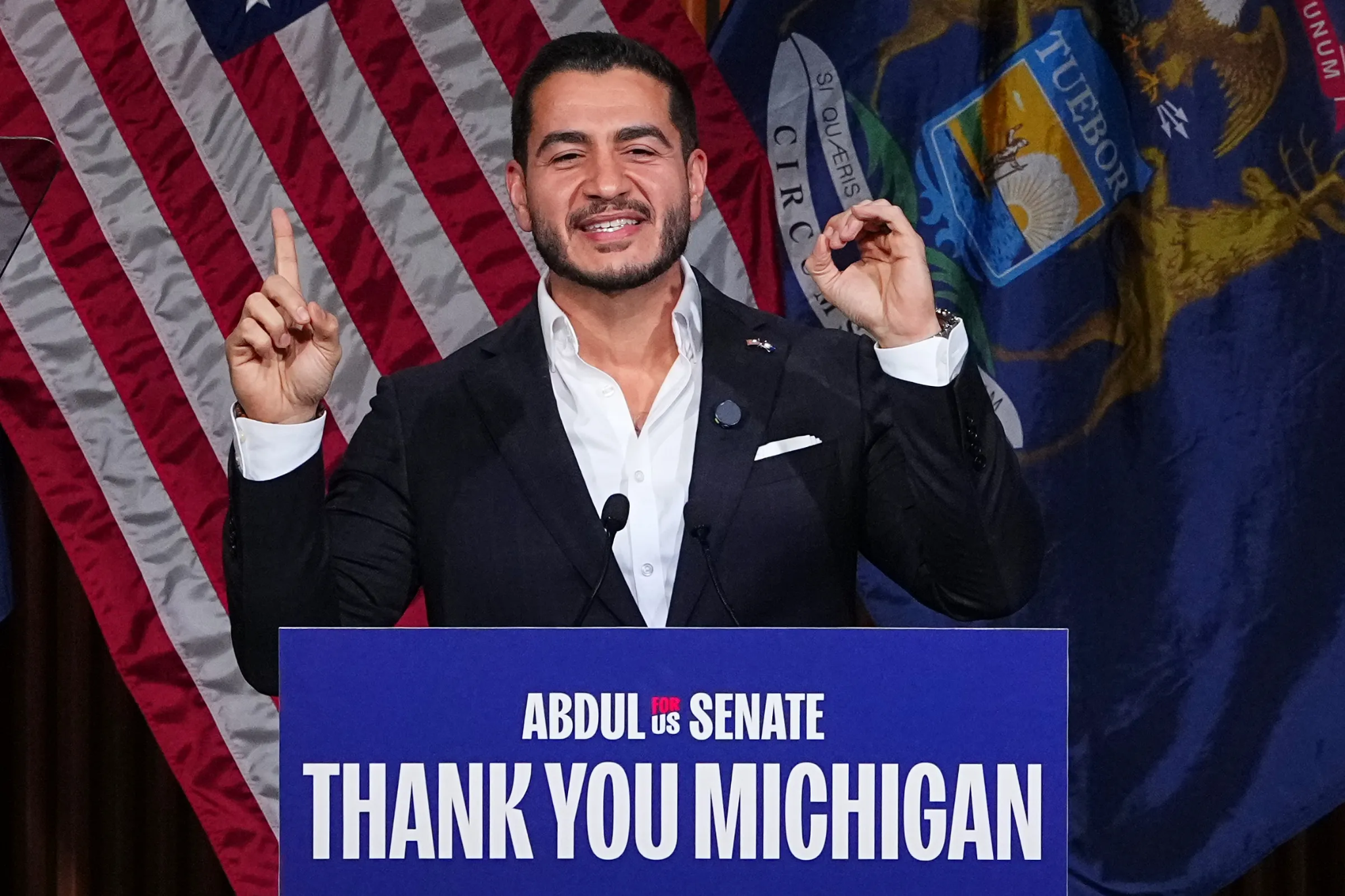
Democrat Abdul El-Sayed said ‘Wolverine 1, Buckeye 0’ after a historic Senate win in Michigan, referencing his feud with Vice President JD Vance. Source: Bridge Michigan.
Progressive Democrat Abdul El-Sayed will become the United States’ first Muslim Senator, marking a significant milestone for the Muslim diaspora in America. Despite a surge of anti-Muslim rhetoric against the senator-elect, his success may signify increased participation in federal decision-making and visibility for the underrepresented minority in Washington.
His win could reflect Muslim Americans’ growing influence in Congress and suggest that voters are rejecting Islamophobia campaign tactics. After El Sayed’s unprecedented victory, both parties may rethink how they reach Muslim American voters, a group that has long been underrepresented.
In his victory speech, El-Sayed said, “Tonight, we can turn that inshallah into an alhamdulillah.” This broadly translates to “hope turning into gratitude and success” in his mother tongue, Arabic. This could signal El-Sayed’s ambition for Michigan’s economically underperforming state, but also for the unlikely senator-elect. This multicultural moment may have once been unimaginable for generations of Muslim Americans who grew up under national security scrutiny post-9/11, fearing discriminatory attacks for speaking Arabic in public. “To be openly Muslim begets social stigma” is a mantra that the community seems to have internalized. Yet, the Egyptian-American’s pride in his roots and victory could be poignant for them, as their religious identity is no longer a point of social contention and a key element of his victory speech.
Despite Republicans and other opponents’ anti-Muslim rhetoric, El-Sayed’s victory may mark a significant shift in Muslim representation and public opinion. Republican opponents’ campaigns were steeped in Islamophobic dogwhistles, like Mike Rogers, who sought to paint El-Sayed as a radical candidate sympathetic to Islamic extremism with ties to the Muslim Brotherhood.
Trump said El-Sayed was a “jihadist” and derided his middle name Mohamed in rallies. These derisive claims echo damaging post-9/11 anti-Muslim politics, from critics attacking Obama’s middle name Hussein in 2008 to the 2017 executive order that banned visitors from predominantly Muslim countries. Muslim communities may see this as the GOP’s now failed attempt to curry sympathy with voters using Huntington’s culturally essentialist ‘Clash of Civilizations’ thesis that pits the West against Muslims.
Anti-Muslim political rhetoric seems to be short-lived in its success. Rogers lost to El-Sayed by nearly 7 percent, losing support from Michiganders who previously helped carry Trump to victory in 2024. This could signal that the electorate is less persuaded by the Republicans’ anti-Muslim and divisive campaigns, compared to El-Sayed’s populist campaigning and progressive economic policies. The GOP may contemplate how their alienation of the once-reliable Muslim voting bloc in Bush’s 2000 presidential election has now cost them over twenty years later.
Democrats have also been quiet on Islamophobia and have underestimated the unpredictability of the Muslim vote. International allies, not other senior Democrats, have worryingly noticed their silence on anti-Muslim crimes. In 2015, Turkish President Recep Tayyip Erdogan criticised then-President Barack Obama for delaying his public statement on the murder of three Muslim students in Chapel Hill. In Chapel Hill, official references to their murders are not keen to cite hate crime, much to the chagrin of the victims’ relatives and community. This incentivized progressive and hijabi Durham County Commissioner Nida Allam to run unsuccessfully against establishment favorite Valerie Foushee in the competitive North Carolina Democratic primary earlier this year. If the Democrats fear holding Islamophobia to account, the community may be frustrated and expect more from the party they traditionally back. Establishment Democrats shouldn’t expect them to hold back and not run against them to represent their interests.
The Democrats seem to remain disunited on their stance on the marginalized community. Last year, New York senator Kirsten Gillibrand claimed that the progressive Mayor of New York, Zohran Mamdani, made references to “global jihad” before his election. This may be a sign of a deeper problem of Islamophobia that the party needs to tackle, especially as Democrat Muslim representation in Congress has been visible since 2006. Muslims are tired of their votes being taken for granted. Democrats should not be complacent if they fear a return of the 2024 protest vote against them in the same heavily Muslim cities that helped secure El-Sayed’s win. They are a prominent community whose votes have swayed some of the most monumental races for the swing state of Michigan this decade and must be taken into bigger consideration as the 2028 presidential election approaches.
El-Sayed made jestful but not punitive references to his critic JD Vance, labelling him as ‘habibi’ in his victory speech. ‘Habibi’ translates to ‘my love’ in Arabic, reserved as a term of endearment among Muslims and Arabic speakers. It is ironic that the incoming senator seems to meet hate with love, a message that captures his supporters across the political aisle in the swing state. His playful retort shows that anti-Muslim rhetoric is a tired strategy that no longer sways American voters more concerned about healthcare and the economy. Muslim representation is now present in all forms of government, signalling that they are no longer passive political agenda consumers but makers. El-Sayed’s win shows that the ‘Clash of Civilisations’ argument no longer holds conviction in America or for voters in Michigan - a fact Republicans and Democrats must reckon with for 2028.