
As Early Voting Continues, Down-Ballot Races Remain Uncertain
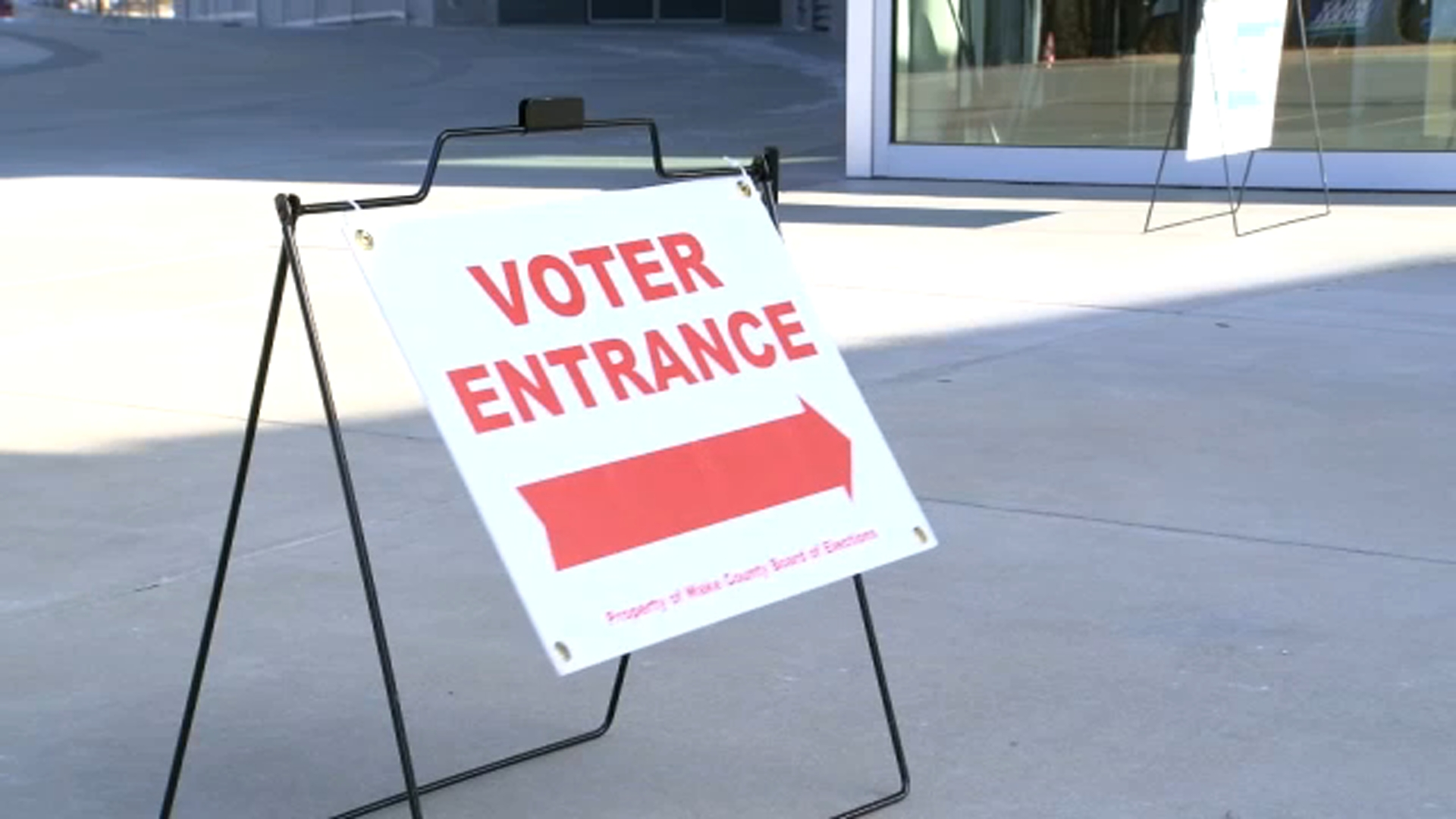
Sign points voters towards the polls at the start of early voting. Source: ABC 11.
As North Carolina voters head to the polls this fall, much of the attention is on the U.S. Senate race between Democrat Roy Cooper and Republican Michael Whatley. But further down the ballot lies the chance for voters to decide who represents them in the state legislature. These representatives make decisions about public schools, taxes, and state spending that could directly affect North Carolinians’ daily lives.
In-person early voting began October 15, with 370 locations across North Carolina. By Saturday, October 24, more than 1.54 million North Carolinians had cast ballots, representing 19.6% of registered voters. At the same point in the 2022 midterm election, only 15.2% of registered voters had voted. But high turnout does not necessarily mean voters are paying attention to every race on the ballot.
Candidates further down the ballot often face voter roll-off, when voters vote in high-profile races but leave contests further down the ballot blank. State and local candidates often receive less media coverage and campaign funding than federal candidates, which can be less familiar to voters. But these races can influence people’s everyday lives.
In Orange and Chatham counties, only two North Carolina General Assembly seats are contested this fall: House District 56 and Senate District 23. In House District 56, the sitting incumbent Democratic representative Allen Buansi is running for re-election against Libertarian Matthew Clements. This district has historically leaned heavily democratic, making it a very safe seat for Buansi, who won the 2024 general election for this seat with 86.3% of the vote. In Senate District 23, Democrat Jonah Garson faces Republican Laura Pichardo for the seat left vacant after former Senator Graig Meyer stepped down in March. This district also leans heavily democratic, with the former Senator winning the seat with 65.8% of the vote in 2024.
These contests can be decided by just a small number of votes. The General Assembly has two chambers: the Senate, which is currently made up of 30 Republicans and 20 Democrats, and the House of Representatives, which is currently made up of 71 Republicans, 47 Democrats, and 2 independents.
Republican legislators can also override Democratic Governor Josh Stein’s vetoes if they secure a three-fifths vote in each chamber. This requires 30 of the 50 senators and 72 of the 120 representatives. Republicans hold that required majority in the Senate, but narrowly miss in the House, 71 of the 72 required seats, leaving them just one seat short of a veto-proof supermajority. Although Republicans have still managed to override vetoes, with the help of independents, gaining one more House seat would make it possible to do it without Democratic support.
North Carolina also has a history of ticket-splitting, meaning voters support candidates from different political parties in the same election—a trend that is thought to be declining. In eight of the past twelve presidential elections, North Carolina voted for a governor of one party and a president of another. It was also one of only three states to do so in the most recent set of elections.
This history makes it difficult to predict how a closely watched race at the top of the ballot could affect candidates further down. Yes, a high-profile Senate race could bring more people to the polls, giving legislative candidates more opportunities to earn votes, but it does not guarantee voters will actually research or vote for those candidates.
So while the U.S. Senate race dominates headlines, don’t forget the other races down the ballot, which could help determine the policies North Carolina adopts in the coming years. Taking the time to consider those races is another way to influence the decisions that affect your everyday lives.
Election Day is November 3 from 6:30 am to 7:30 pm. Make sure to vote!