
Too Close to Call: Could Late October Controversy Sway Alaska?
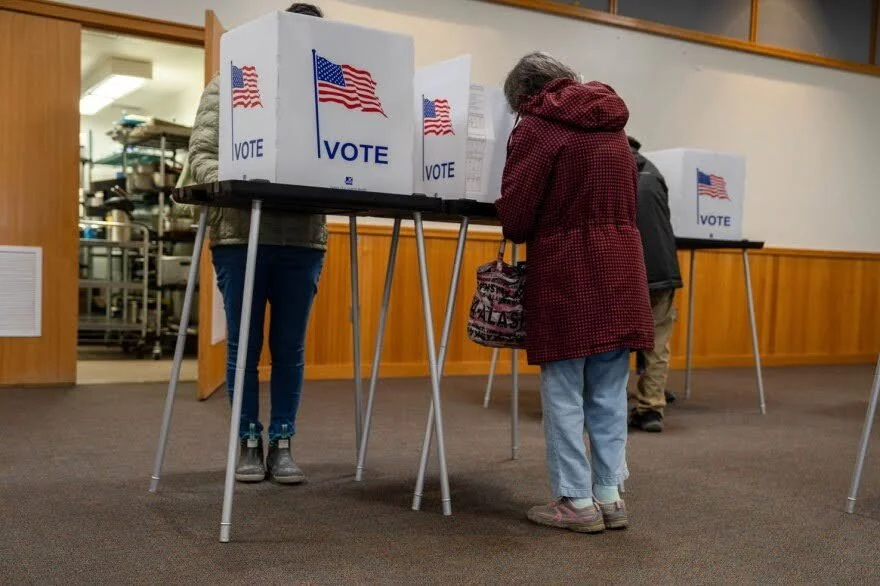
Voters in Alaska on November 3, 2026. Source: Alaska Public.
The Alaska Senate Election has quickly become one of the most interesting races in the 2026 Midterms. Despite Alaska’s long-term history of voting Republican, including 16 out of the last 17 presidential elections, Democratic challenger Mary Peltola has maintained a narrow polling lead over the Republican incumbent Dan S. Sullivan. Combined with her large fundraising efforts and finishing ahead of Sullivan in the August primary by an 8.1 percentage point margin, the data appears to be in Peltola’s favor in the Senate race. However, a recent controversy reported in the New York Times less than a week away from the election on Wednesday, October 28, could be the final factor that sways the toss-up race in favor of Sullivan.
One of the most unusual aspects of this election is that there are two Dan Sullivans on the ballot. Along with the Republican incumbent, Daniel J. Sullivan Jr., a retired teacher from Petersburg, is also running for Senate. The Times article published last week reported that staff members of Peltola’s campaign allegedly helped recruit the second Dan Sullivan to confuse voters and potentially take away votes from the current Senator. Peltola has since denied all involvement with the endeavor titled the “ballot composition project,” but former campaign manager Elisa Rios, who participated in several interviews with the Times’ reporters, claimed that she was "definitely aware.” While ballot stacking is not technically illegal, the Justice Department has already filed lawsuits and appeals if Sullivan loses by a circumstance caused by the confusing ballot because “Alaskan voters deserve a fair election.”
This could matter most among independent voters, 65% of the voting population in Alaska, who are already closely divided between the candidates. Those initially drawn to Peltola due to her commitment to working across parties might see this as undermining her bipartisan values of putting Alaska first. Additionally, Peltola’s campaign frequently criticized Sullivan for being corrupt, and this controversy could contradict the message of political integrity that she has emphasized throughout the race.
While the Associated Press has not called this race yet, Peltola is leading with 48.2% compared to Sullivan’s 47.9%, an extremely small margin. However, as of now, 73% of the votes were cast on Election Day, in contrast to 23% of votes from early voting. Sullivan is currently leading with 50% of Election Day votes, a number that could have been influenced by the recent controversy. With such a narrow margin and votes yet to be counted, it remains unclear who could win the race, but the final results could reveal whether the late October controversy had any meaningful effect on Alaskan voters.